
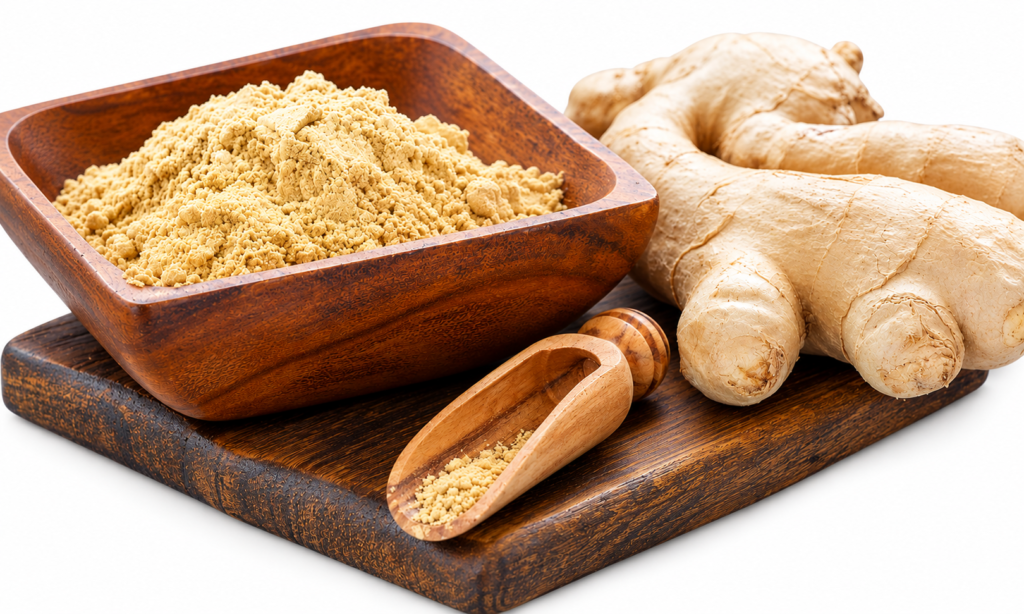
Organic ginger powder continues to be a practical botanical ingredient for brands developing digestive health, wellness, and functional nutrition products. With its familiar ingredient profile and long history of traditional use, ginger fits naturally into formulas designed around digestive wellness while also offering flexibility across capsules, powders, drink mixes, and functional food applications.
For R&D teams and supplement manufacturers, ginger is particularly useful when a formulation calls for a recognizable botanical rather than a highly complex ingredient system. It can be used on its own or incorporated into broader digestive health formulas alongside fibers, probiotics, enzymes, and other botanical ingredients.
Nutrient Innovations offers Ginger Root Powder as part of its broad portfolio of botanical and raw ingredients for supplement and functional food development.
Why Organic Ginger Powder Remains Relevant to Formulators
Ginger (Zingiber officinale) has been used traditionally for digestive complaints and nausea, and it remains one of the more recognizable botanical ingredients in the wellness category. Modern research has also investigated ginger for nausea and vomiting, although evidence varies depending on the specific application and preparation.
From a formulation perspective, its familiarity can be an advantage.
Organic ginger powder can fit into products positioned around:
- Digestive wellness
- Everyday gastrointestinal support
- Functional nutrition
- Herbal wellness
- Clean-label formulations
- Botanical blends
- Functional beverages
- General wellness products
For brands, the ingredient provides a straightforward botanical story that can complement broader digestive health positioning.
Organic Ginger Powder vs. Ginger Extract
One of the first decisions formulators need to make is whether a product requires ginger powder or ginger extract.
Organic ginger powder is made from dried ginger rhizome and processed into a powder. It is generally used when a formulation calls for a whole botanical powder or a recognizable plant-based ingredient.
Ginger extract, on the other hand, is produced through an extraction process and can be standardized or concentrated around particular constituents depending on the specification.
The two formats are not interchangeable.
When selecting between them, R&D teams should consider:
- Intended dosage
- Desired ingredient profile
- Product format
- Sensory characteristics
- Manufacturing process
- Target positioning
- Cost considerations
- Required specifications
A whole-root powder can make sense for a clean-label botanical formula, while an extract may be more appropriate when concentration or standardization is a priority.
How Ginger Fits Into Digestive Health Formulations
Digestive health is a broad category, and modern formulas often combine several ingredient types rather than relying on a single botanical.
Ginger can serve as the botanical component of a broader formula that may also include:
- Prebiotic fibers
- Probiotic strains
- Digestive enzymes
- Botanical extracts
- Fruit and vegetable powders
- Vitamins and minerals
This gives formulators flexibility when developing products for different consumer needs and delivery formats.
Nutrient Innovations’ portfolio includes dedicated gut health and probiotic ingredients, including prebiotic, probiotic, and postbiotic options designed for dietary supplements and functional foods.
Pairing Ginger With Prebiotic Ingredients
Prebiotic fibers are another important category within digestive health product development.
Ingredients such as inulin and fructooligosaccharides (FOS) can be incorporated into products designed around digestive wellness and fiber intake. Nutrient Innovations’ portfolio includes ExtraBiotix Pre 100% Blue Agave Inulin, as well as FOS and other fiber ingredients.
A ginger and prebiotic combination can provide formulators with two distinct ingredient stories within the same product:
Ginger: a recognizable botanical ingredient with a long history of traditional use.
Prebiotic fiber: a functional ingredient incorporated to provide dietary fiber and support the formulation’s gut-health positioning.
The exact combination, dosage, and claims should always be determined based on the finished product, ingredient specifications, available evidence, and applicable regulatory requirements.
Ginger and Probiotic Formulations
Probiotics can also be incorporated into digestive health formulas alongside botanical ingredients such as ginger.
Nutrient Innovations offers Bacillus coagulans Unique IS-2®, a spore-forming probiotic strain that the company positions for digestive health, functional foods, and a variety of nutraceutical formats. The ingredient is described as suitable for applications including capsules, tablets, powders, gummies, beverages, and functional foods.
For R&D teams developing combination formulas, the important consideration is not simply whether two ingredients can be placed in the same formula. Compatibility, stability, processing conditions, moisture, pH, dosage, and shelf-life requirements should all be evaluated.
Formulation Considerations for Organic Ginger Powder
Selecting the right ginger ingredient involves more than choosing an ingredient name from a supplier list.
1. Ingredient Specifications
R&D and quality teams should review the specification sheet for the particular ginger material being considered.
Depending on the supplier and application, specifications may address:
- Botanical identity
- Part of plant used
- Appearance
- Particle size
- Moisture
- Microbiological parameters
- Heavy metals
- Other quality attributes
The finished specification should match the requirements of the intended product.
2. Organic Certification
For brands developing organic products, certification is an important consideration.
The specific organic certification and documentation should be reviewed for the ingredient being sourced rather than assuming that a product described as “organic” meets every certification requirement for the finished product.
This is particularly important for brands selling across different markets where organic standards and labeling requirements may differ.
3. Flavor and Aroma
Ginger has a naturally strong and recognizable flavor and aroma.
This can work well in certain products, particularly:
- Herbal drink mixes
- Wellness beverages
- Tea products
- Botanical powders
- Digestive wellness blends
However, formulators developing capsules, gummies, or flavored powders may need to consider how ginger interacts with sweeteners, flavors, acids, and other botanicals.
Sensory testing can help determine whether the ingredient works as intended within the finished product.
4. Powder Characteristics
For powdered products, characteristics such as particle size, moisture, bulk density, and flow can influence manufacturing performance.
These factors can affect:
- Blending
- Encapsulation
- Tablet compression
- Powder filling
- Dispersion
- Finished-product consistency
The best ingredient specification is therefore not necessarily the one with the lowest price. It is the one that works reliably within the intended manufacturing process.
Applications for Organic Ginger Powder
Organic ginger powder can be considered across several supplement and functional food formats.
Capsules and Tablets
Capsules and tablets provide a straightforward delivery format for powdered botanical ingredients.
Ginger can be used as a standalone ingredient or incorporated into multi-ingredient formulas targeting digestive wellness or broader botanical support.
Powder Blends
Powdered products offer more flexibility for combining ginger with other functional ingredients.
Potential applications include:
- Daily wellness powders
- Digestive drink mixes
- Botanical blends
- Functional nutrition powders
- Herbal formulations
Flavor development becomes particularly important in these applications because ginger has a naturally noticeable sensory profile.
Functional Beverages
Ginger is already familiar to consumers as a beverage ingredient, making it a natural fit for certain functional beverage concepts.
It may be incorporated into:
- Wellness drink powders
- Herbal beverages
- Tea blends
- Functional shots
- Botanical drink mixes
Formulators should evaluate solubility, dispersion, flavor, acidity, and stability based on the specific beverage system.
Functional Foods
Depending on the ingredient specification and manufacturing conditions, ginger powder may also be considered for functional food applications.
Potential applications include:
- Nutrition bars
- Functional snacks
- Bakery products
- Herbal food blends
- Other botanical food products
Processing conditions should be evaluated carefully because heat, moisture, and other manufacturing variables can affect ingredient characteristics.
What Should Brands Look for When Sourcing Ginger Powder?
For commercial supplement development, sourcing decisions should extend beyond ingredient availability.
A brand or contract manufacturer may want to evaluate:
Quality Documentation
Ask for relevant documentation such as a Certificate of Analysis (COA), specification sheet, allergen statement, country-of-origin information, and applicable certification documents.
Consistent Supply
For brands moving from pilot production into commercial manufacturing, consistency of supply becomes increasingly important.
A suitable supplier should be able to support production requirements and communicate availability and lead times clearly.
Manufacturing Compatibility
An ingredient should be evaluated according to how it will actually be used.
A powder intended for capsules may have different requirements from one intended for a beverage or functional food.
Batch-to-Batch Consistency
Consistent specifications can help reduce variability during manufacturing and make it easier for R&D teams to maintain a stable finished-product profile.
Technical Support
For more complex formulations, access to ingredient documentation and technical support can help R&D teams evaluate how a raw material fits into the overall product.
Nutrient Innovations works with supplement brands and manufacturers across a broad ingredient portfolio, with its positioning extending beyond ingredient distribution into formulation and R&D support.
Building a More Complete Digestive Health Formula
Ginger does not necessarily need to be the only active ingredient in a digestive wellness product.
Depending on the product concept, formulators can consider different ingredient categories that address different formulation objectives.
For example:
Botanicals can provide recognizable plant-based ingredients.
Prebiotic fibers can contribute functional fiber to a product.
Probiotics can provide specific microbial strains selected for the intended application.
Postbiotics offer another option for digestive health formulations where stability and processing considerations are important.
Digestive enzymes can also be considered for formulas built around digestive support.
Nutrient Innovations’ current product portfolio includes digestive enzymes such as amylase, bromelain, papain, and pepsin, in addition to probiotics and prebiotic fibers.
The right combination depends on the product’s target market, dosage form, formulation objectives, manufacturing process, and regulatory requirements.
Why Organic Ginger Powder Can Be a Practical Choice
For brands looking for a familiar botanical that can fit into multiple product concepts, organic ginger powder offers several practical advantages.
It can provide:
- A recognizable botanical identity
- Organic positioning where appropriately certified
- Flexibility across multiple delivery formats
- Compatibility with broader botanical formulas
- Opportunities for digestive wellness positioning
- A familiar ingredient story for consumers
At the same time, formulators should evaluate the ingredient based on its actual specifications and intended application rather than treating all ginger powders as interchangeable.
Final Considerations for Formulators
Organic ginger powder is a versatile botanical ingredient that can fit naturally into modern digestive health and wellness formulations.
Its value from an R&D perspective comes not only from its traditional association with digestive wellness, but also from its flexibility as a powdered botanical ingredient.
When evaluating ginger for a new product, brands should consider:
- Powder vs. extract
- Organic certification
- Ingredient specifications
- Quality documentation
- Sensory characteristics
- Powder properties
- Manufacturing compatibility
- Stability requirements
- Finished-product claims
- Regulatory considerations
For supplement brands and contract manufacturers, selecting the right raw material is an important part of building a consistent, formulation-ready product.
Frequently Asked Questions
What is organic ginger powder?
Organic ginger powder is produced from the dried rhizome of Zingiber officinale and processed into a powdered botanical ingredient. It can be used in dietary supplements, functional foods, beverages, and botanical formulations.
What is organic ginger powder used for?
Organic ginger powder is commonly considered for digestive wellness, botanical, and general wellness formulations. Ginger has also been studied for nausea and vomiting, although research findings vary depending on the specific use and preparation.
What is the difference between ginger powder and ginger extract?
Ginger powder is the dried and powdered plant material, while ginger extract is produced through an extraction process and may be concentrated or standardized around specific constituents. The appropriate form depends on the formulation objective.
Can ginger powder be used in digestive health supplements?
Yes. Ginger powder can be incorporated into digestive wellness supplements in formats such as capsules, tablets, powder blends, and functional foods or beverages.
Can organic ginger powder be combined with probiotics?
Yes. Ginger can be used as part of a multi-ingredient digestive health formula that also contains a probiotic. However, compatibility, stability, processing conditions, and finished-product requirements should be evaluated during formulation.
Can ginger powder be combined with prebiotic fiber?
Yes. Ginger and prebiotic fibers can be incorporated into the same digestive wellness formulation when the ingredients are compatible with the intended product format and manufacturing process.
What should manufacturers check when sourcing ginger powder?
Manufacturers should review botanical identity, ingredient specifications, organic certification where applicable, COA documentation, microbiological requirements, contaminants, country of origin, sensory characteristics, storage requirements, and manufacturing compatibility.
What product formats can use ginger powder?
Depending on its specifications, ginger powder can be considered for capsules, tablets, powder blends, functional beverages, herbal products, and functional foods.
Is ginger powder suitable for clean-label formulations?
Ginger powder can fit naturally into clean-label product concepts because it is a recognizable botanical ingredient. Brands should still verify the actual ingredient specifications, processing methods, certifications, and labeling requirements for their finished product.
Where can supplement manufacturers source ginger root powder?
Nutrient Innovations lists Ginger Root Powder within its broad portfolio of botanical and raw ingredients for supplement, food, and functional product development.
Develop Your Next Digestive Health Formula
The right ingredient can provide the foundation for a strong product, but successful formulation also depends on specifications, sourcing, manufacturing compatibility, stability, and product positioning.
For brands developing digestive health supplements, functional beverages, or botanical wellness products, Nutrient Innovations can help identify raw ingredients that fit your formulation requirements.